What’s New in vSphere 6.0: vCenter
VMware has used its VMworld keynotes and sessions to lift the lid on parts of what is included in the vSphere 6.0 Public Beta. This is still in beta, remember, so some functionality may not actually make it into the finally released version and there may still be further bits and pieces revealed.
VMware continues to build out its hypervisor core management application vCenter with more functionality. There are no dramatic architectural changes but VMware is moving slowly to pull apart vCenter into its component parts to be able to run more vCenters at scale and is creating a central services function.
What’s New in vSphere 6.0: Multi-CPU Fault Tolerance
VMware has used its VMworld keynotes and sessions to lift the lid on parts of what is included in the vSphere 6.0 Public Beta. This is still in beta, remember, so some functionality may not actually make it into the finally released version and there may still be further bits and pieces revealed.
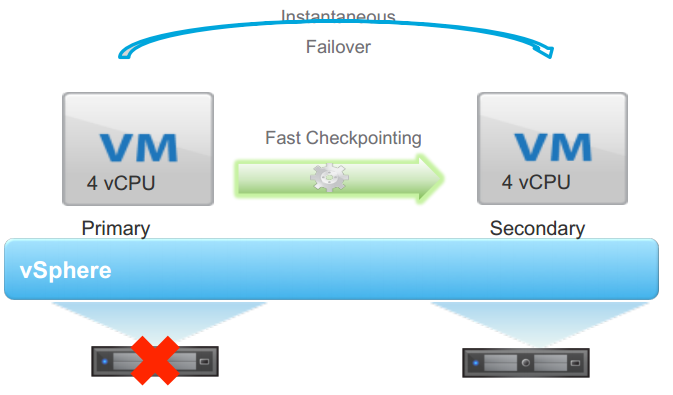
It’s been many many years in the making but at last Fault Tolerance for Multi-Processor VMs has seen the light of day and was announced during the VMworld keynote today.
FT will now support VMs with up to 4 x vCPUs and 64GB RAM. SMP-FT as it’s called works differently than FT for single CPUs. There is a new fast check-pointing mechanism to keep the primary and secondary in sync. Previously a “Record-Replay” sync mechanism was used but the new fast check-pointing has allowed FT to expand beyond 1 x vCPU. Record-Replay kept a secondary VM in “virtual lockstep” with the primary. With fast check-pointing the primary and secondary VM execute the same instruction stream simultaneously making it much faster. If the FT network latency is too high for VMs to stay in sync, the primary will be slowed down to the point that the secondary can keep up. You can also now hot-configure FT.

What’s New in vSphere 6.0: Cross vCenter and Long Distance vMotion
VMware has used its VMworld keynotes and sessions to lift the lid on parts of what is included in the vSphere 6.0 Public Beta. This is still in beta, remember, so some functionality may not actually make it into the finally released version and there may still be further bits and pieces revealed.
At the VMworld Keynote on Day 2, vMotion enhancements in the new vSphere were revealed..
vMotion is one of most basic yet coolest features of vSphere, People generally consider the time they saw vMotion work for the first time as their “wow” moment showing the power of virtualisation. in vSphere 5.5, vMotion is possible within a single cluster and across clusters within the same Datacenter and vCenter. With vSphere 6.0 vMotion is being expanded to include vMotion across vCenters, across virtual switches, across long distances and routed vMotion networks aligning vMotion capabilities with larger data center environments.
vMotion across vCenters will simultaneously change compute, storage, networks, and management. This leverages vMotion with unshared storage and will support local, metro and cross-continental distances.

You will need the same SSO domain for both vCenters if you use the GUI to initiate the vMotion as the VM UUID can be maintained across vCenter Server instances but it is possible with the API to have a different SSO domain. VM historical data is preserved such as Events, Alarms and Task History. Performance Data will be preserved once the VM is moved but is not aggregated in the vCenter UI. the information can still be accessed using 3rd party tools or the .API using the VM instance ID which will remain across vCenters.
Comments
Post a Comment